This thread will outline the concept of MSRS – Multiple Support Response Spectrum. This is a pure dynamic approach. The previous thread presented the concept of SAM (Seismic Anchor Movement), which was implemented in the statics module.
In AutoPipe, the MSRS method is easy to implement. First, you need to group the system segments as needed. Let's say you're using the same model divided into three sections.
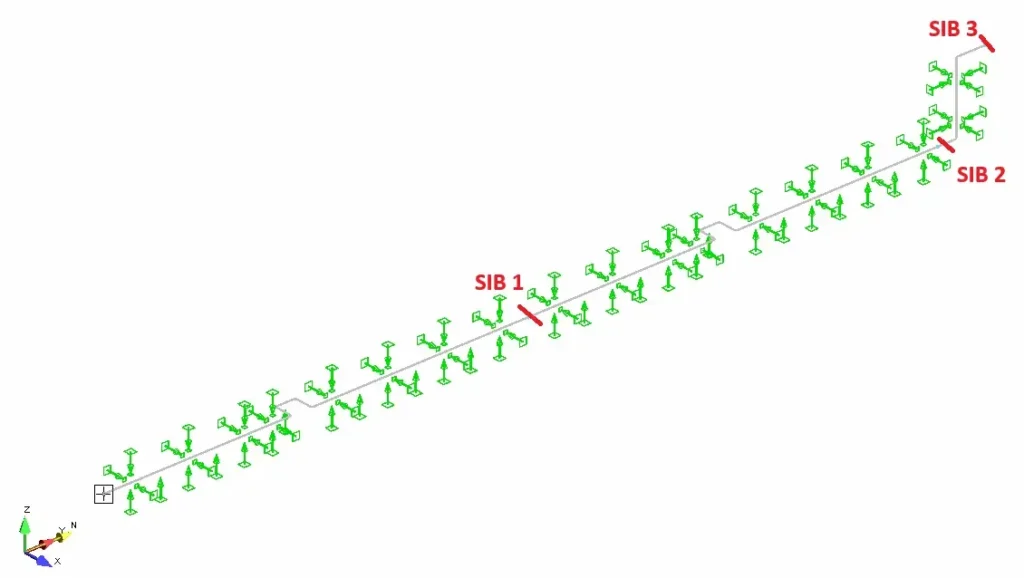
We select the segment and group using a dedicated command. This allows us to assign a different SAM combination to each group.

It is very easy to define combinations of seismic sects in very different ways
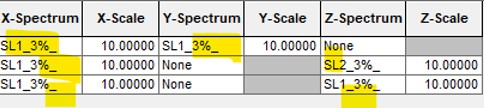
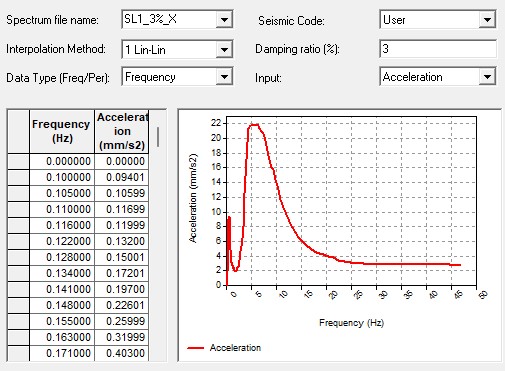
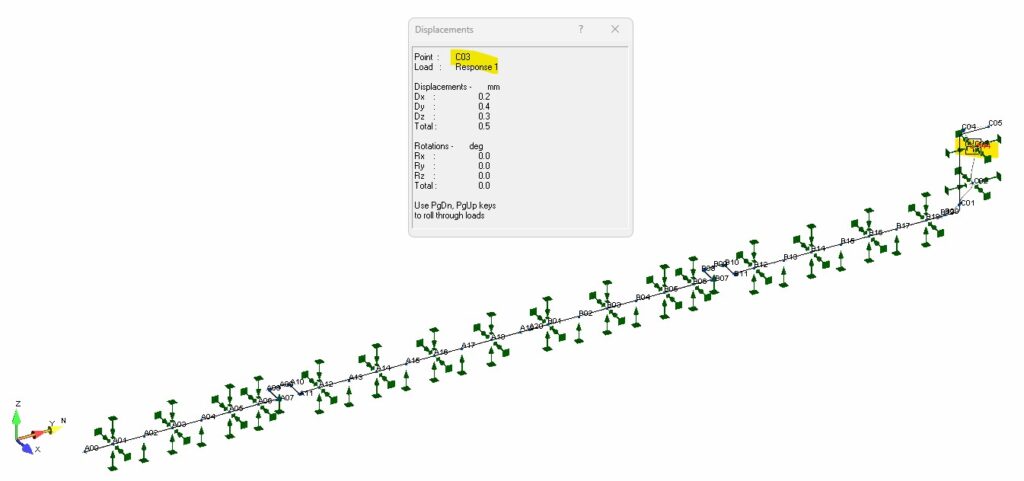
The results are in a very accessible form: For the MSRS 1 combination:
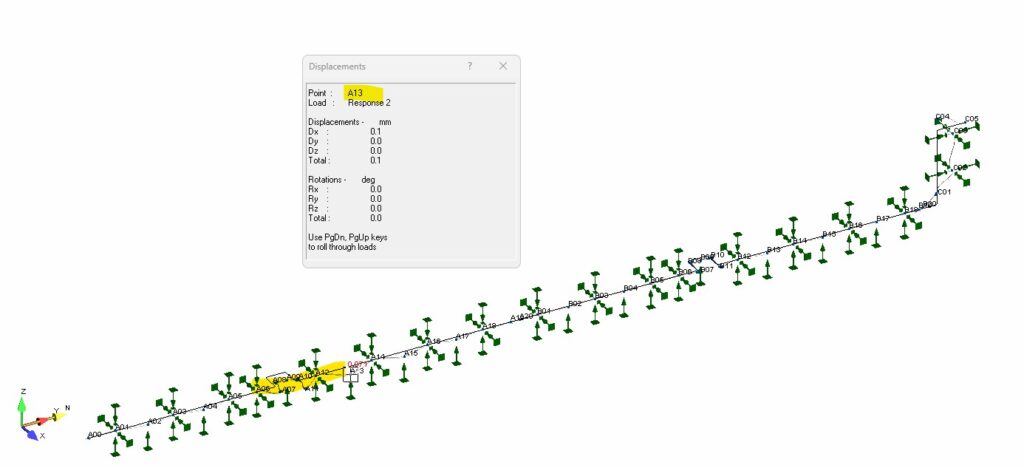
MARS 2 looks different because the combination of spectra was different.
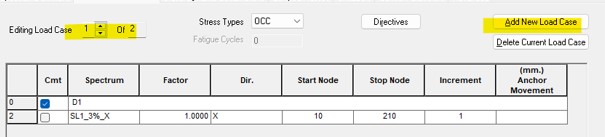
Caesar, unfortunately, is two classes worse. It doesn't have a convenient menu for dividing into zones. We define dynamic forcing combinations. We can enter a range of nodes, but it's not required. If left blank, it means the entire system will be considered.
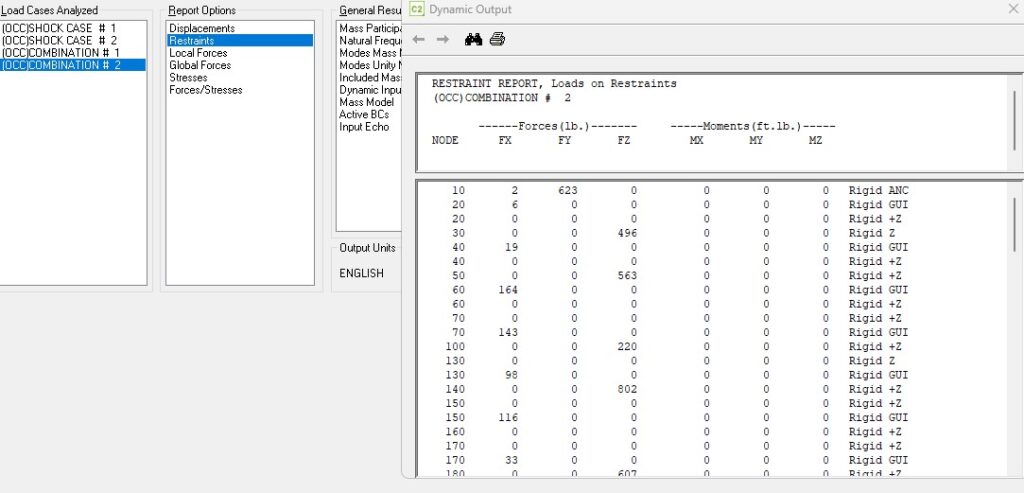
The results can only be viewed in table format, which is disappointing compared to AutoPipe. For MSRS 1, it looks like this:
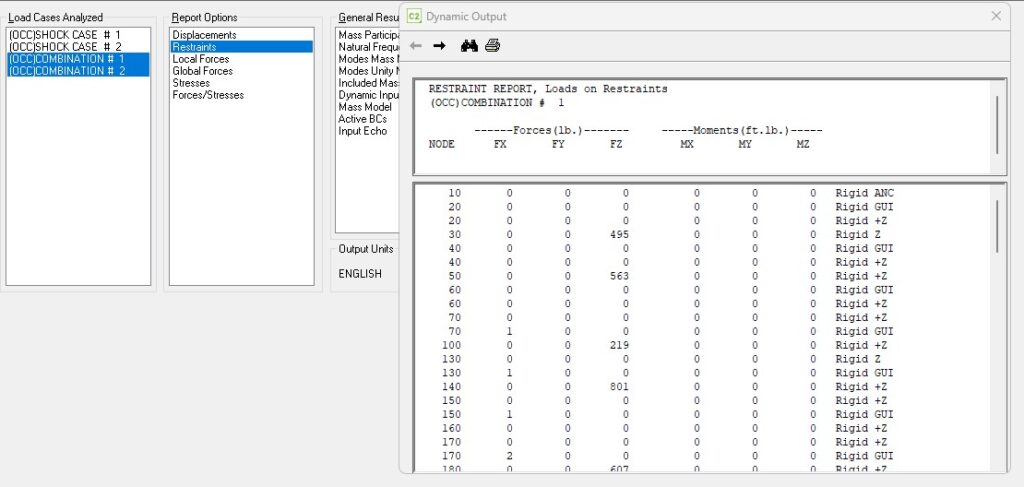
For MSRS 2 is: